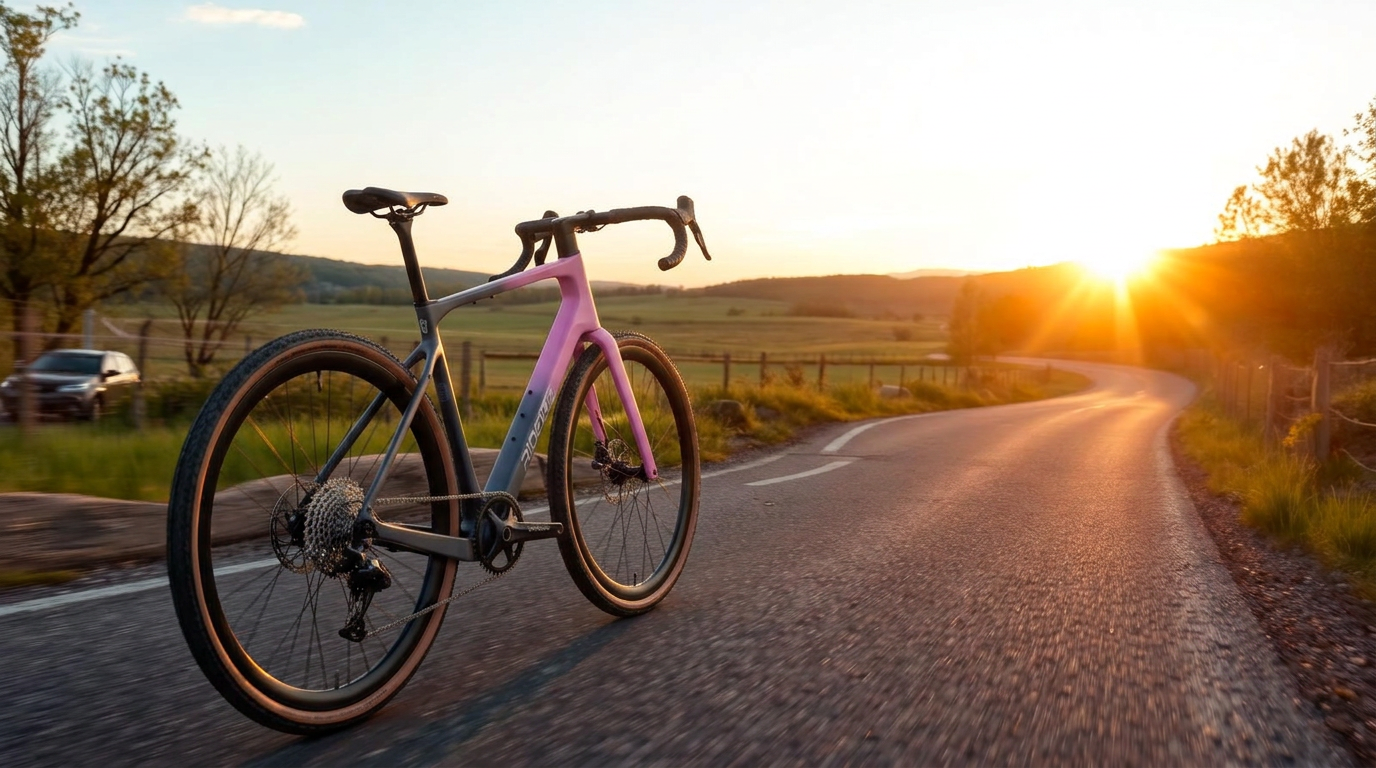
Ride1UP CF Racer1 Review: Carbon Performance With Assist
The lightest bike Ride1UP makes — here's how the carbon frame, small hub motor, and road-to-gravel setup actually ride, and who should buy something else.
Disclosure: This page contains affiliate links. We may earn a commission at no extra cost to you.
TL;DR
Ride1UP CF Racer1 Review: The Short Verdict
The Ride1UP CF Racer1 is the outlier in the lineup: a carbon fiber performance bike that happens to have a motor, rather than an e-bike styled to look sporty. The 250W hub delivers 42Nm through a torque sensor, so assist arrives in proportion to your effort and then gets out of the way. The result rides far closer to a fast road or gravel bike than anything else Ride1UP sells.
The trade-offs follow from that choice. There's no cargo capacity, no throttle-first power, and the small in-frame battery means 16–40 miles rather than the 50-plus of the utility models. Buy the CF Racer1 if ride feel and weight are what you're paying for. If you want range, hauling, or effortless hills, the Vorsa or Prodigy v2 make more sense.
Pros & Cons
What We Like and Don't Like About the CF Racer1
Pros
- Full carbon fiber frame — the lightest bike in the Ride1UP lineup
- Athletic, efficient ride feel that stays close to a normal road bike
- Discreet assist: it doesn't look or ride like a typical e-bike
- Class 3 capable for fast road commutes up to 28 MPH
- Road and gravel tire clearance for mixed-surface riding
Cons
- No cargo, rack, or comfort utility — this is a performance bike
- Smaller 250W/42Nm motor won't haul you up steep hills without effort
- Shorter range than the utility models, especially in higher assist
Design & Build
CF Racer1 Carbon Frame and Component Choices
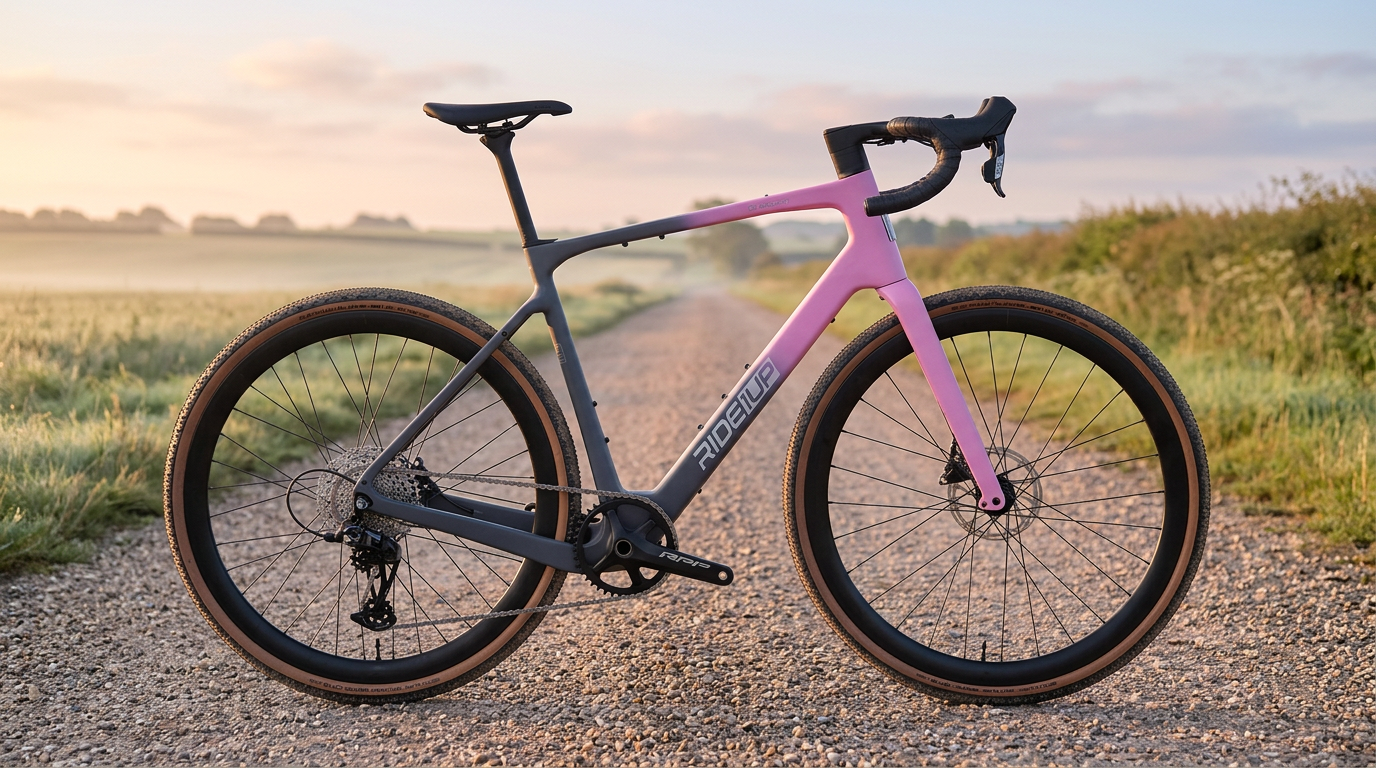
Carbon fiber is the whole argument. It lets Ride1UP shape a frame that's both stiff under pedalling and light enough to shoulder up a flight of stairs, which no other model in the lineup manages. A rigid carbon fork keeps the front end precise and saves more weight than a suspension unit would.
The motor and battery are sized to protect that weight target rather than to maximise the spec sheet. A compact rear hub disappears visually into the wheel, the battery lives inside the frame, and the display is deliberately minimal. Most people won't register this as an e-bike at a glance.
Hydraulic disc brakes handle stopping in all weather, and the road/gravel tire setup gives you fast pavement rolling with enough width for hardpack and fire roads. What's missing is deliberate: no rack, no fender package, no cargo pretensions.
Motor & Battery
250W Hub Motor: CF Racer1 Power and Real-World Range
At 250W sustained and 42Nm, this is the smallest motor Ride1UP fits to anything — and that's the point. On a bike this light, modest torque still produces a meaningful effect, because there's far less mass to move than on a 70-pound utility e-bike. The assist feels like added fitness rather than a push.
The torque sensor is what sells the experience. Power scales with how hard you're pedalling, so accelerations feel like your own and the bike never surges underneath you. That's the behaviour road and gravel riders want, and it's why a cadence-sensor setup would have ruined this bike.
Range runs roughly 16–40 miles. The in-frame battery is small to keep the bike light, so treat the upper figure as light-assist riding on gentler terrain and plan longer days around conserving assist — which is easy, since the bike pedals well unpowered.
Ride Quality
What the Ride1UP CF Racer1 Feels Like to Ride
The CF Racer1 rides like a performance bicycle with a tailwind. It changes direction quickly, holds speed on rolling roads, and responds to out-of-the-saddle efforts the way a normal bike does — none of the inertia that makes heavy e-bikes feel disconnected.
Climbing is honest work. Forty-two newton-metres flattens a gradient rather than erasing it, so you'll still shift and push on steep pitches. Riders coming from a mid-drive or a 750W hub should expect a different bargain: less brute force, far less weight.
Comfort is bicycle-grade. With no suspension and a rigid fork, rough chipseal comes straight through, and tire pressure becomes your main comfort dial. On smooth pavement and hardpack gravel, though, it's easily the most enjoyable bike in the range.
How we evaluated the CF Racer1
This Ride1UP CF Racer1 review is research-based, not a hands-on test. Our assessment draws on Ride1UP's published specifications, component manufacturer datasheets, verified owner reviews, and independent industry coverage. We score every Ride1UP ebike review on the same criteria — motor and torque, real-world range, ride quality and components, practicality, and value for the price — so the rankings stay comparable across models.
Comparison
Ride1UP CF Racer1 vs the Rest of the Lineup
| Model | Where the CF Racer1 wins | Buy the other one if… |
|---|---|---|
| Ride1UP Roadster v3 | CF Racer1 wins on weight, frame material, and outright performance feel. | Choose the Roadster v3 if you want a cheaper light city commuter and don't need carbon. |
| Ride1UP Prodigy v2 | CF Racer1 wins on weight and sporty road efficiency. | Choose the Prodigy v2 for mid-drive torque, comfort, and commuter practicality. |
| Ride1UP Vorsa | CF Racer1 wins anywhere speed, weight, and ride feel matter more than hauling. | Choose the Vorsa for payload, throttle, and the most utility per dollar. |
| Ride1UP TrailRush | CF Racer1 wins on pavement and fast gravel. | Choose the TrailRush if you ride real singletrack and need suspension. |
Still deciding between models? Read our Ride1UP ebike review comparing every main model, or see the Ride1UP Roadster v3 review, Ride1UP Prodigy v2 review, Ride1UP Vorsa review, Ride1UP TrailRush review, and Ride1UP Portola review.
Full Specs
Ride1UP CF Racer1 Full Specifications
| Motor | 250W sustained rear hub, 42Nm torque |
|---|---|
| Sensor | Torque sensor for proportional assist |
| Battery | Integrated in-frame lithium-ion |
| Range | 16–40 miles depending on assist level, terrain, and rider weight |
| Top speed | Up to 28 MPH pedal assist (Class 3) |
| Class | Class 1 or Class 3 depending on setting |
| Frame | Carbon fiber |
| Fork | Rigid carbon |
| Brakes | Hydraulic disc brakes |
| Tires | Road / gravel tires |
| Weight | Lightest model in the Ride1UP lineup |
| Display | Minimal integrated display |
| Extras | Clean cable routing, no rack or fender package |
Specifications reflect Ride1UP's published figures and can change between production runs. Confirm current details on the official product page before ordering.
FAQ
Ride1UP CF Racer1 Review: Common Questions
Is the Ride1UP CF Racer1 worth it?+
It's worth it for riders who want a performance bike first and an e-bike second. The carbon frame and light weight give it a ride quality no other Ride1UP matches on pavement. If you want range, cargo capacity, or throttle power, the Vorsa or Prodigy v2 are better buys.
What is the real-world range of the Ride1UP CF Racer1?+
Ride1UP quotes roughly 16–40 miles. The in-frame battery is small by design to keep weight down, so expect the low end riding hard in high assist and the upper end with light assist on flatter routes.
How fast is the Ride1UP CF Racer1?+
Pedal assist supports up to 28 MPH in Class 3 mode. Because the bike is light and efficient, holding speed takes less effort than on the heavier utility models.
How much does the CF Racer1 weigh?+
It's the lightest bike in the Ride1UP lineup thanks to its carbon fiber frame, small hub motor, and compact in-frame battery — a meaningful difference if you carry it up stairs or lift it onto a rack.
Does the CF Racer1 have a throttle?+
It's built around torque-sensing pedal assist rather than throttle riding, which is what keeps the ride feel close to a normal performance bicycle. Confirm the current configuration on the official product page.
Can the CF Racer1 handle gravel?+
Yes — it's set up for road and light gravel. It handles hardpack and fire roads comfortably, but it has no suspension, so rough singletrack belongs on the TrailRush.
Can I commute on the CF Racer1?+
It makes a fast commuter if your route is paved and you don't need to carry much. There's no rack or fender package, so plan on a backpack and separate accessories.
Final Verdict
Buy the CF Racer1 for ride feel, not for range
A carbon frame, the lightest weight in the lineup, and torque-sensing assist that stays out of the way — the CF Racer1 is the Ride1UP for riders who want a performance bike first and an e-bike second.
Prices and availability change. Confirm current details on the official Ride1UP site.